
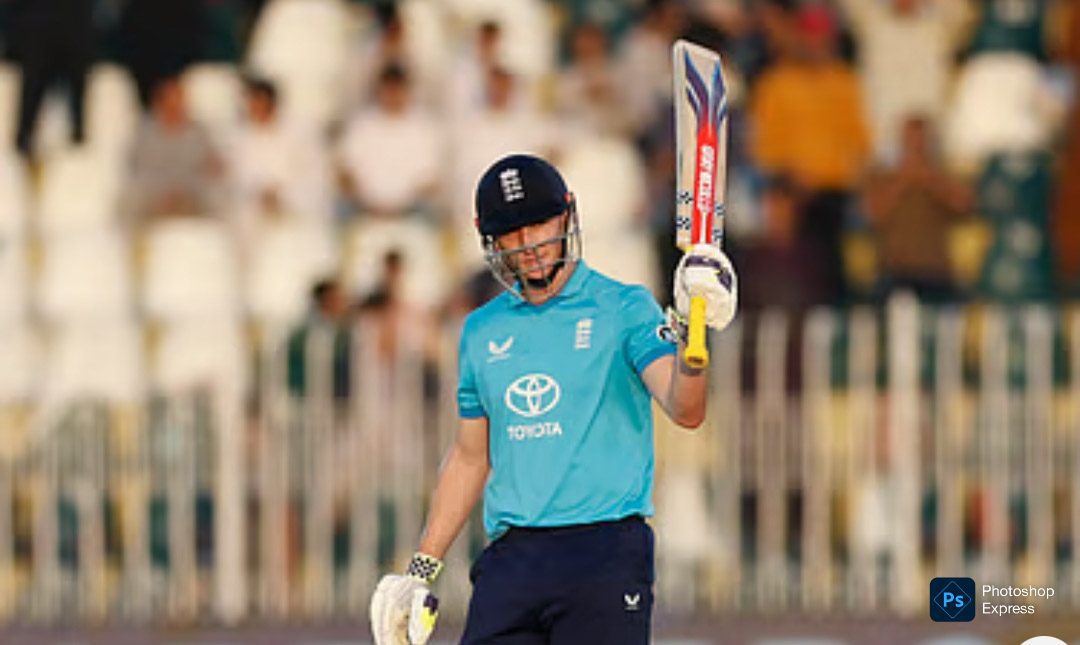
England captain scores 202 off 116 balls against Sri Lanka, setting a new benchmark for the fastest double century in men’s ODI cricket.
Shubman Gill’s world record lasted less than a month. England captain Harry Brook has rewritten the record books with a sensational double century against Sri Lanka in Rawalpindi, becoming the fastest batter to reach 200 runs in men’s One-Day International cricket.
Brook completed his double century in just 114 balls during the tri-nation series encounter, surpassing Gill’s previous record of 117 balls. He eventually departed for a remarkable 202 off 116 deliveries, powering England to a massive total of 429 for four in their allotted 50 overs.
The innings was historic on several fronts. Brook became the first England batter to score a double century in men’s ODI cricket, while also surpassing Ben Stokes’s previous national record of 182 runs.
## A slow start before an explosive acceleration
Brook’s innings did not begin with the kind of fireworks that eventually defined it. Coming in at number four, the England captain managed just 13 runs from his first 24 deliveries as he took time to settle at the crease.
However, once he found his rhythm, the match changed dramatically.
Brook launched his assault against Sri Lanka’s bowling attack by hitting two consecutive sixes off Kamindu Mendis. That sequence appeared to unlock his aggressive instincts, and he began finding boundaries with remarkable consistency.
Using a combination of conventional strokes and innovative shot-making, Brook attacked the Sri Lankan bowlers all around the ground. Sweeps, scoops and reverse scoops became regular features of his innings, leaving the opposition struggling to establish control.
He reached his century off 75 balls and accelerated further after crossing the milestone. His ability to switch from a measured start to relentless aggression proved decisive as England built an imposing total.
Brook’s innings was not simply about power hitting. He also showed excellent control, exploited gaps in the field and maintained pressure on the bowlers throughout the middle and final overs.
## Record-breaking partnerships drive England forward
Brook received valuable support from Joe Root and Will Jacks, with two substantial partnerships helping England turn a promising position into a commanding one.
The England captain added 159 runs for the third wicket with Root, whose experience and composure complemented Brook’s attacking approach. Root contributed 69 off 66 balls, helping England maintain momentum while Brook took on the role of the primary aggressor.
After Root’s dismissal, Brook continued his assault alongside Jacks. The pair added another 185 runs for the fourth wicket, putting Sri Lanka’s bowling attack under enormous pressure.
Jacks produced a blistering contribution of his own, scoring an unbeaten 66 off just 30 balls. His aggressive batting ensured that England’s scoring rate remained exceptionally high towards the end of the innings.
England collected 156 runs in the final 10 overs, turning an already strong total into a formidable one.
Brook was eventually dismissed on the final delivery of the innings, having scored 202 from 116 balls. His knock included 21 fours and 10 sixes, giving him a strike rate of approximately 174.14.
The innings demonstrated a remarkable combination of patience, power and innovation. After taking time to settle, Brook transformed the contest with an extraordinary display of attacking cricket.
## Ben Stokes’s England record falls
Before Brook’s achievement, the highest individual score by an England batter in men’s ODI cricket was Ben Stokes’s 182 against New Zealand at The Oval in 2023.
Stokes had produced that memorable innings during an explosive run chase, setting a new benchmark for England’s ODI batting.
Brook surpassed the record by moving beyond 182 and continued to pile on the runs before reaching 202. His achievement ended England’s long wait for an ODI double centurion.
The milestone is particularly significant given England’s transformation into one of the most aggressive batting sides in limited-overs cricket over recent years.
Despite their reputation for attacking cricket, England had never previously produced a double centurion in a men’s ODI. Brook’s innings finally ended that drought in emphatic fashion.
His performance also underlined his growing importance to the team, both as captain and as one of its most dynamic batters.
## Gill’s record broken after just 22 days
Brook’s achievement came only weeks after India captain Shubman Gill set the previous benchmark for the fastest double century in men’s ODI cricket.
On September 30, Gill reached 200 off 117 balls against the West Indies. He went on to finish unbeaten on 223, producing one of the finest innings of his ODI career.
Gill had taken the record from fellow Indian batter Ishan Kishan, who had reached his double century in 126 balls against Bangladesh in Chattogram in December 2022.
Brook has now moved ahead of Gill by completing his double century three balls faster.
The rapid succession of record-breaking innings highlights the increasingly aggressive approach adopted by modern ODI batters. With greater emphasis on maintaining scoring momentum and attacking bowling from the outset, previously extraordinary milestones are being challenged more frequently.
Brook’s achievement is particularly striking because he initially appeared to be playing himself into the innings before dramatically increasing his scoring rate.
Gill’s record, which looked exceptional when established, lasted just 22 days before another England captain produced an even faster double century.
## England post a record total in Pakistan
Brook’s remarkable innings helped England finish on 429 for four in 50 overs, establishing a new ODI benchmark for a team total on Pakistani soil.
The score also represented the highest ODI total against Sri Lanka, making the match a historic occasion for England’s batting unit.
Brook’s 202 was the centrepiece of the innings, but the contributions from Root and Jacks were equally important in ensuring England capitalised on their strong position.
Root’s 69 provided stability during the middle overs, while Jacks’s rapid unbeaten half-century helped England finish with a flourish.
The final 10 overs were particularly devastating for Sri Lanka, as England added 156 runs during that period. The sustained assault left the bowlers with few opportunities to regain control.
A total of 429 placed considerable pressure on Sri Lanka’s batting line-up, requiring them to produce an exceptional performance to remain competitive.
For England, the innings demonstrated the potential of their batting order when their leading players combine consistency with aggressive stroke play.
## A rare achievement across all three formats
Brook’s double century also adds to his impressive list of achievements in international cricket.
He has joined West Indies great Chris Gayle as a batter to have registered a triple century in Test cricket, a double century in ODIs and a century in T20 international cricket.
These milestones require different skills and approaches. A Test triple century demands exceptional concentration and endurance over an extended period, while an ODI double century requires a balance between sustained batting and aggressive scoring.
A T20 international century, meanwhile, demands the ability to score rapidly within a limited number of deliveries.
Brook’s achievements across the three formats underline his versatility and ability to adapt to different conditions and match situations.
His latest performance further strengthens his reputation as one of England’s most exciting modern batters. At a relatively young age, he has already demonstrated the capacity to produce match-defining innings across formats.
## What Brook’s innings means for England
For England, Brook’s performance represents more than an individual record. It is also a significant statement about the team’s batting potential in the ODI format.
A total exceeding 400 runs places enormous pressure on any opposition, particularly when it is built around an innings of such exceptional speed.
Brook’s ability to recover from a slow start and then dominate the bowling attack showed the value of maintaining composure before accelerating at the right moment.
His partnerships with Root and Jacks also demonstrated how England can combine experience, calculated aggression and power hitting to maximise their scoring opportunities.
As captain, Brook’s innings will be remembered as a defining performance. He not only led from the front but also established a new world record while helping his side post a historic total.
The match in Rawalpindi has added another remarkable chapter to the history of ODI cricket. Gill’s record had stood for only a few weeks, but Brook has now raised the benchmark even higher.
Whether the new record survives for years or is challenged again in the near future remains to be seen. For now, however, Harry Brook stands at the top of the list, having reached 200 faster than any batter before him in men’s ODI cricket.
His 202 off 116 balls was an extraordinary display of modern-day batting—and a reminder that, in cricket, even the newest records can be short-lived.